the capacity to be alone
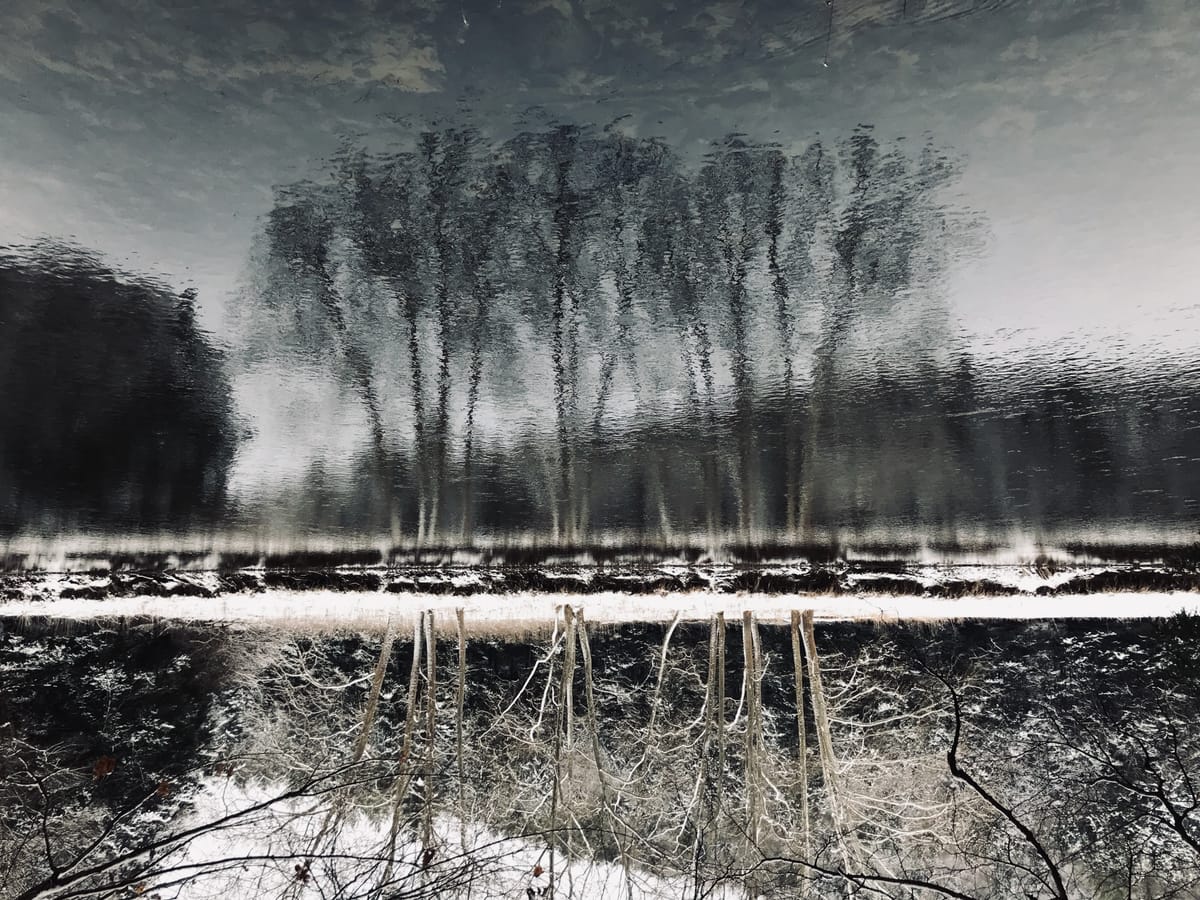
I used to be pretty really good at meditation. I had it. It was a tool in my toolbox and I used it to solidify a good day or make a bad day better. But then, at some point, I lost it. It was here and then it was gone and I didn't know its true value until it was lost, like most things.
As cold weather returns to the area, I aim to get it back. One of the reasons it is so challenging is because there are so many humans in this world and so much human stuff going on all the time. With all of that calling out to me, with so many things to engage with, why retreat into a quiet space alone? I know the answer to that rhetorical question, but for some reason, I struggle to go there. It's a bummer to have lost it, because as I dwell on what project to write next, I know I must cultivate the same quiet time and space within myself just to get started. It's more than just a work thing, though. Being alone matters.* Too many writers and thinkers have commented on this for it not to be true:
All of humanity's problems stem from man's inability to sit quietly in a room alone. – Blaise Pascal, Pensées, 17th-century philosopher
The confirmation of others: a sickness the entire race will die of.
― Richard Powers, The Overstory, 21st-century author
Into my dilemma steps a man who wrote about loneliness more than most...
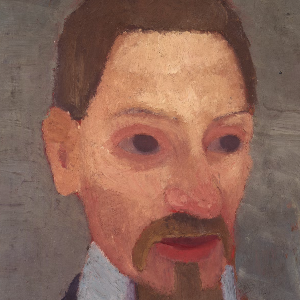
...René Karl Wilhelm Johann Josef Maria Rilke. Between 1902 and 1908, the Austrian poet and novelist wrote several letters to a 19-year-old Austrian military cadet: Franz Xaver Kappus. Franz sent a few of his own poems to his favorite poet, Rilke, and asked for some advice about what to do with his life. Rilke responded and the correspondence lasted for 6 years. Many of these letters touch on loneliness and solitude as necessary to a mature, creative life. Rilke's letters were eventually collected and became a painfully earnest, and best-selling, book: Letters to a Young Poet. I actually don't own this book, now that I think about it, but it has stuck with me for years. I can revisit it though because I actually took photos of various letters that spoke to me at different points in the past in the library copies I borrowed.** When this one, part of the fourth of the ten letters, bubbles up in my memory, I find this old picture and give it a read:
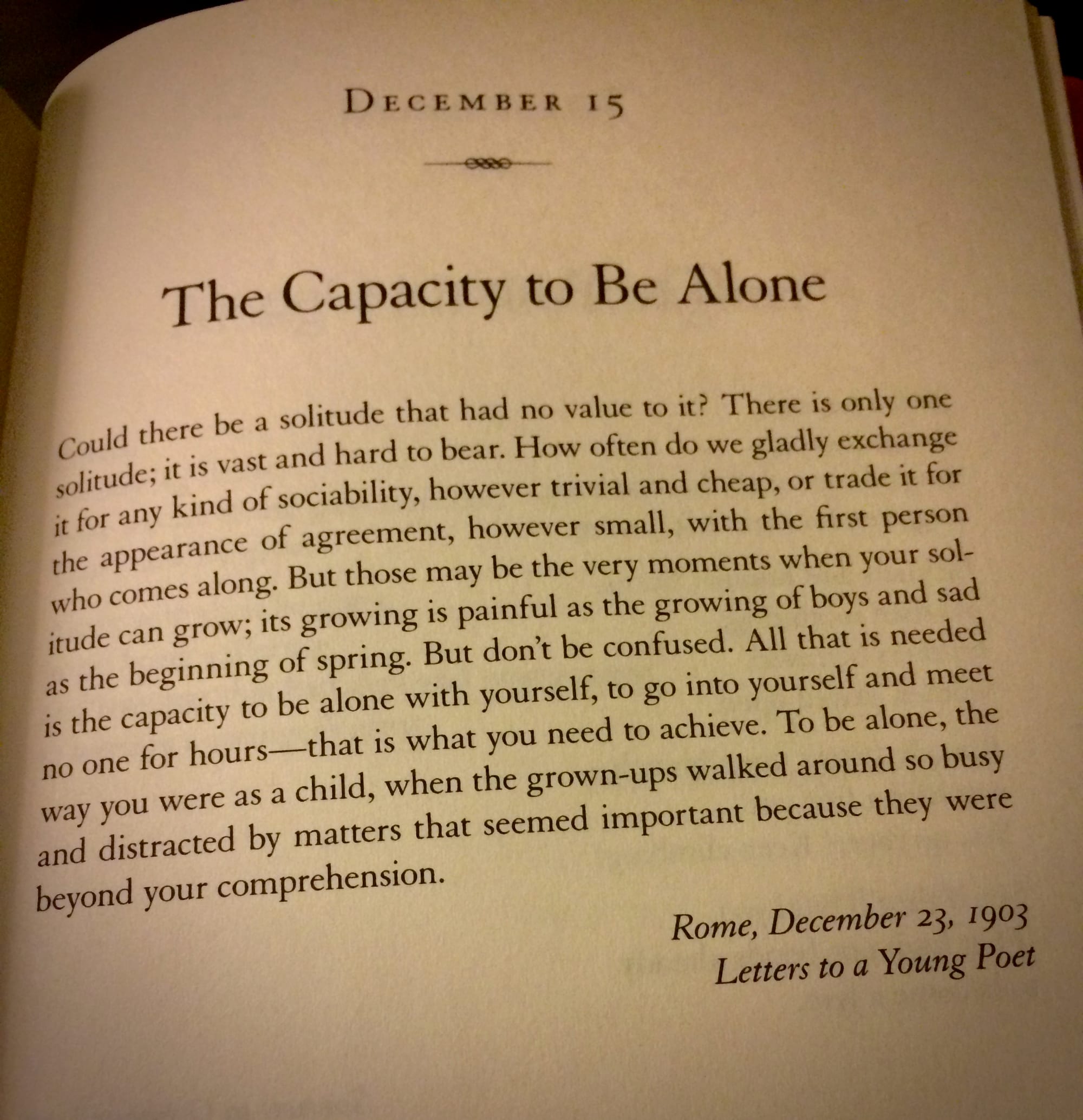
If that's hard to read in the photo, here it is in full:
The Capacity to Be Alone
Could there be a solitude that had no value to it? There is only one solitude; it is vast and hard to bear. How often do we gladly exchange it for any kind of sociability, however trivial and cheap, or trade it for the appearance of agreement, however small, with the first person who comes along. But those may be the very moments when your solitude can grow; its growing is painful as the growing of boys and sad as the beginning of spring. But don't be confused. All that is needed is the capacity to be alone with yourself, to go into yourself and meet no one for hours—that is what you need to achieve. To be alone, the way you were as a child, when the grown-ups walked around so busy and distracted by matters that seemed important because they were beyond your comprehension.
Rome, December 23, 1903
Letters to a Young Poet
I lost it, it being the ability to meditate, because it's hard. It's really hard. And it gets harder every day I don't do it. I skip it, though I have a reminder on my phone set for each day. I don't want to confront myself and I, for sure, don't want to feel lonely in this life if I can avoid it. So the trouble's with my thinking, and with the desire to avoid discomfort at all costs. Maybe that's why I return to this Rilke writing so often: for the encouragement. I don't recall where I heard this or read this, but someone said that solitude and loneliness are actually similar, a simple matter of perspective and word choice. Could be, but I don't know. Why do these things, these islands of wisdom and encouragement, rise out of the murk in my head and above the other noises if they don't lead to action in my day-to-day life? I know all the reasons to, and outcomes of, meditating, yet I hit the 'completed' dot on my Reminder app without even doing the thing and I feel nothing about the deceit anymore.
Rilke, why don't you hold me accountable? Where are my letters?!
I now realize that this, like most things, is Rilke's fault.
* At times, not always.
** I know I should buy it.
indoor animal is curated by a human: Tim Papciak. On Mondays, he shares one link to one music video to help spark creativity in himself and in other creative types. On Thursdays, he recommends a book, movie, show, art piece, or link to some dusty corner of the internet that he believes either 1.) adds to the human experience, or 2.) serves as a coping mechanism in the year 2025. Note: this is not, and never will be, self-help content.