thegns and sparrows
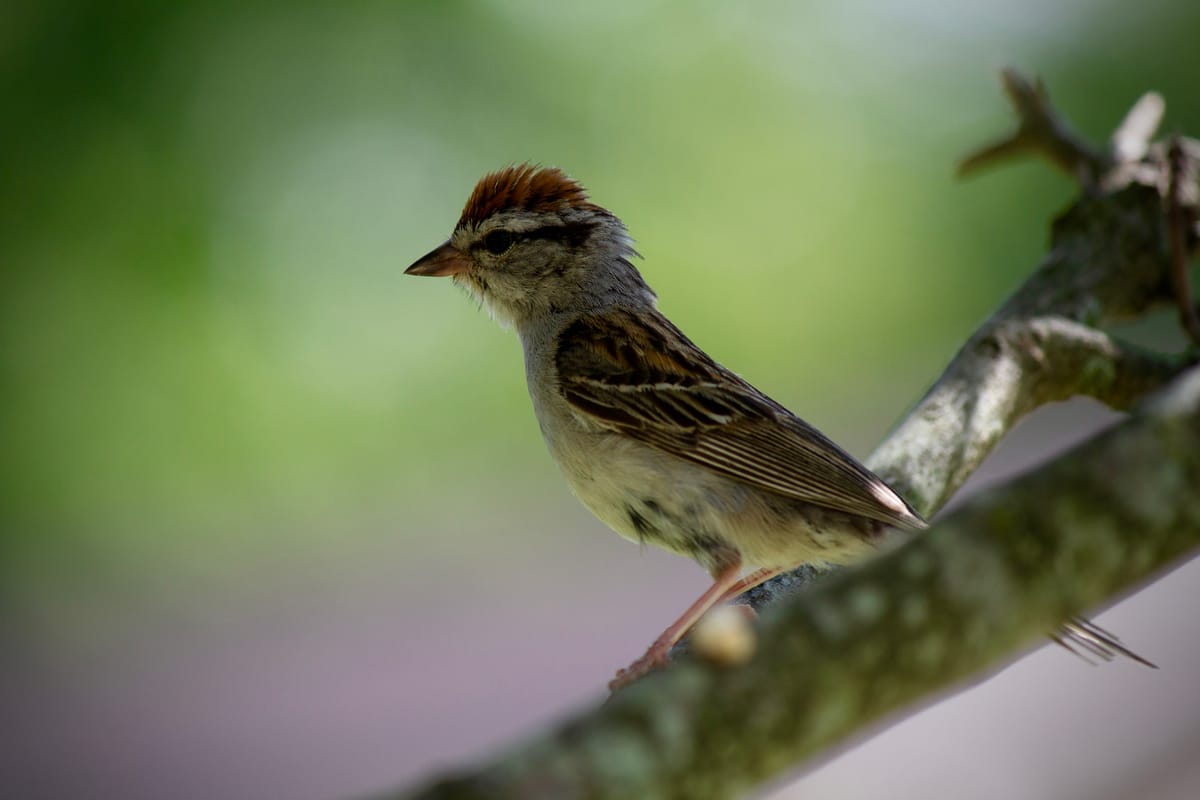
Life, man. Life.
Every time I'm at a Q&A or a panel, the mediator asks the audience one question right at the end: "Does anyone have any other questions?"
And, without fail, my brain thinks, "I do. I have one final question: 'What's it all about?'" It meaning life. I know it's an unfair question for a movie director or a short story author, but I'd really love to see someone field that question on the spot in front of a crowd.
Inevitably, I don't ask the question, but as I make my way home after the event I think about what my answer would be if someone dared ask me that question. What pops into my own thoughts most often is what English Benedictine Monk, Saint Bede the Venerable as he was known, wrote about life’s short journey in one episode of his Ecclesiastical History of the English People from AD 731. I know, I know, super normal.
In Bede's words, an advisor uses an analogy, a sparrow in a mead-hall, when talking with his king about religion’s purpose. This appears in Book II, Chapter 13, where King Edwin of Northumbria sits amongst ealdormen and thegns. A sparrow flies from a cold, stormy night into a warm hall. After a brief reprieve from the elements, the sparrow exits through another window, back into the dark.
Another of the king's chief men, approving of his words and exhortations, presently added: "The present life of man, O king, seems to me, in comparison of that time which is unknown to us, like to the swift flight of a sparrow through the room wherein you sit at supper in winter, with your commanders and ministers, and a good fire in the midst, whilst the storms of rain and snow prevail abroad; the sparrow, I say, flying in at one door, and immediately out at another, whilst he is within, is safe from the wintry storm; but after a short space of fair weather, he immediately vanishes out of your sight, into the dark winter from which he had emerged. So this life of man appears for a short space, but of what went before, or what is to follow, we are utterly ignorant. If, therefore, this new doctrine contains something more certain, it seems justly to deserve to be followed." The other elders and king's councillors, by Divine inspiration, spoke to the same effect.
Though the haunting analogy's purpose is to show how we know nothing of what came before life, and even less about what comes after, I get caught up in the experience of the sparrow in the mead-hall as a way of explaining what we endure in this life more than to highlight the purpose of religion as an explanation for the afterlife.
We’ve all seen birds in unlikely buildings – airports, grocery stores, etc. – before I’m sure. The inviting warmth they might find in such places clashes with the confusion the sparrow must feel. It went from the natural world to the manmade world. Though ealdormen and thegns drink and sup while a fire rages and they are safe from the elements for the night, none of it makes a lick of sense to the flustered sparrow. These noisy men and their ways are foreign to the bird. The large fire, which provides the warmth, burns hot and must be avoided by the small creature. In this brief moment of reprieve from the dark and cold outside, danger still lurks.
So how does thinking all of this help me answer the question, "What's it all about?" I'm not really sure. But, life can be supremely confusing and not make a whole lot of sense at times and I like to see that as a function of life, not a bug. Maybe let's lean into that every once in awhile.
indoor animal is curated by a human: Tim Papciak. On Mondays, he shares one link to one music video to help spark creativity in himself and in other creative types. On Thursdays, he recommends a book, movie, show, art piece, or link to some dusty corner of the internet that he believes either 1.) adds to the human experience, or 2.) serves as a coping mechanism in the year 2025. Note: this is not, and never will be, self-help content.